Provisioning the Sailboat
Recently, while preparing for a two-month sailing voyage, I decided I’d handle the provisioning of the sailboat. However, it wasn’t my boat, I wasn’t the captain … I literally had no skills here.
The captain was busy tending to endless important tasks on his sailboat, so he couldn’t easily handle the provisioning. He needed an assistant.
I wasn’t qualified, but I had more free time for the less important tasks (not that provisioning isn’t vital). Provisioning needed to happen. I needed to step up.
Or, I needed to at least attempt to provision the boat. I knew the captain would inspect it all, then order any necessary changes. He was the final word.
With the plan to sail from one country, cross into another, then sail around somewhat remote islands, vegan (and gluten-free) food might not be easily found during the voyage.
At the very end of the voyage, we’d also sail back into the first country. There would be at least two marine border crossings.
Thus, there would be a lot of restrictions on bringing fresh produce, grains, nuts, seeds, and most other delicious foods into each country.
As much as I wanted to stock the entire boat with enough vegan (and gluten-free) food to last the entire trip, that wasn’t an option. Food had to be carefully timed and found in phases.
Also, I wasn’t sure how much time we’d spend in each country, as the weather would impact our exact locations, as well as the duration at each location.
Anything could happen. We could end up anywhere (at any time).
I did know that we’d anchor out in various locations for about a week at a time, then head to the nearest marina for 24 hours to resupply, even if options were limited ashore.
At each marina, we’d ideally be able to load up on food (whatever food was available), fill the water tank, empty trash, shower, wash laundry, and refuel (as there isn’t always wind to sail).
I knew we’d follow that pattern for about two months.
Did I mention that I needed to provision a forty-year-old sailboat built with no refrigeration, no generator, and no solar? And there was just one working burner—no second burner, no oven.
We were going to eke out as much life from that boat as possible. And we were okay with that since we both grew up in situations where we had to rough it.
Those cooking parameters were actually a blessing, because older boats built without insulation (or heating, did I mention no heating?) can develop a lot of interior condensation.
The less cooking, the less dampness would develop inside the boat (which is good, as nobody wants to be wet and cold on a sailboat for days at a time).
All of this made me think of my happy raw vegan days, wishing I could live off my favorite raw vegan food. Unfortunately, there wouldn’t be power on the boat for a blender, nor enough spare water to clean a blender repeatedly each day. So no raw vegan fun for me.
Essentially, we would be camping while sailing through the water.
Ultimately, I decided it was best that I just provision the sailboat in terms of heft. It was the only way I could start focusing on the task.
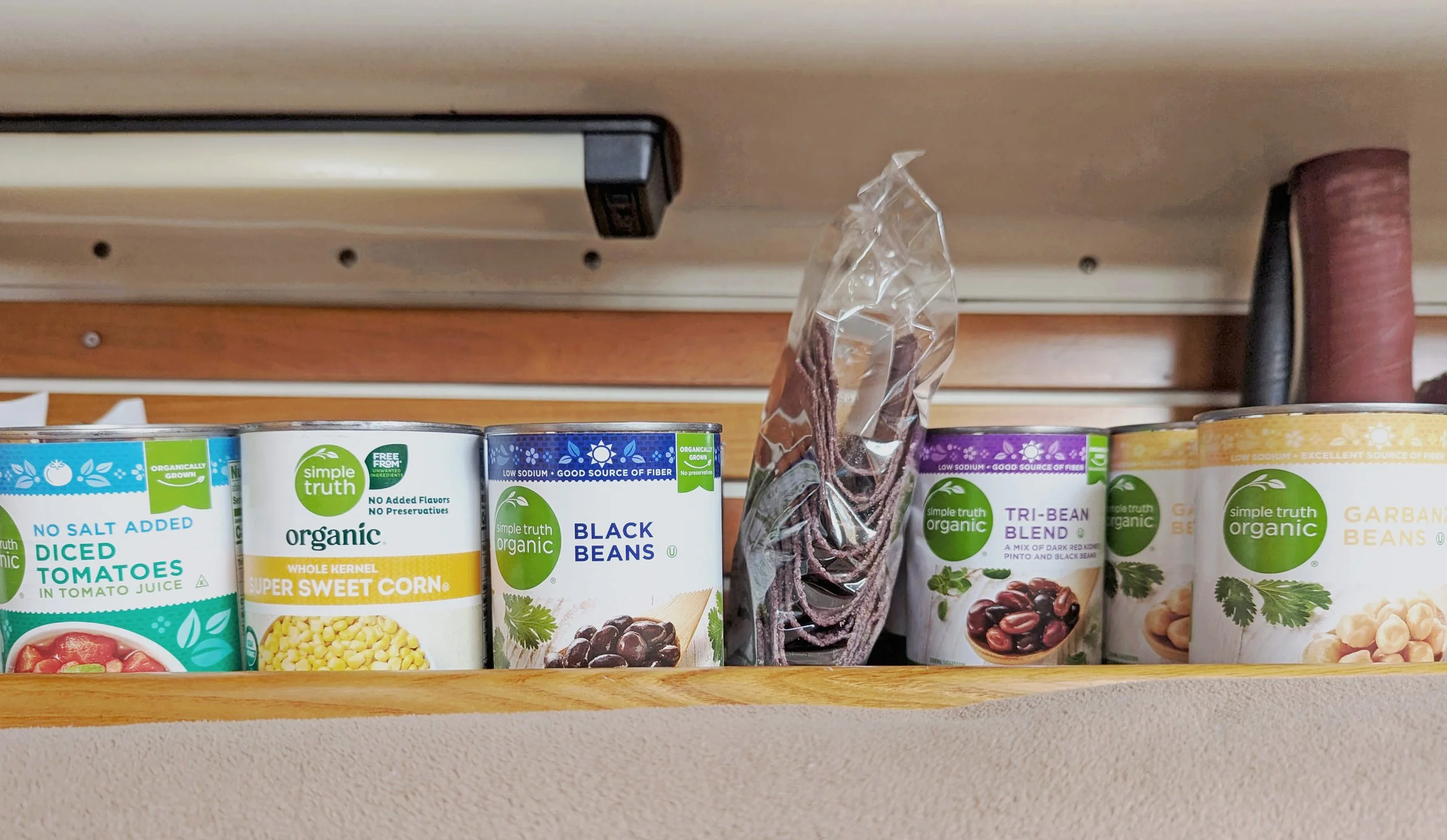
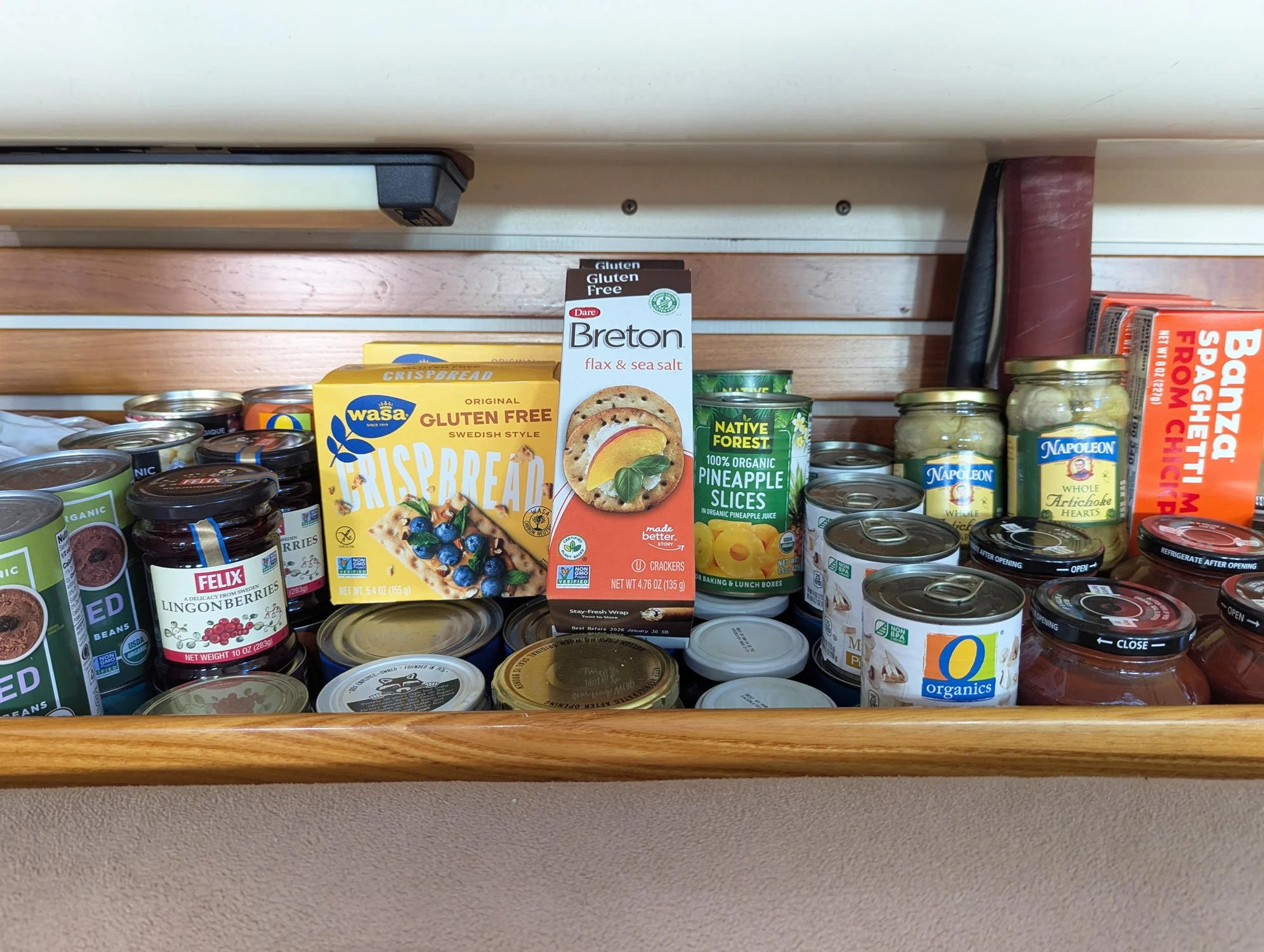
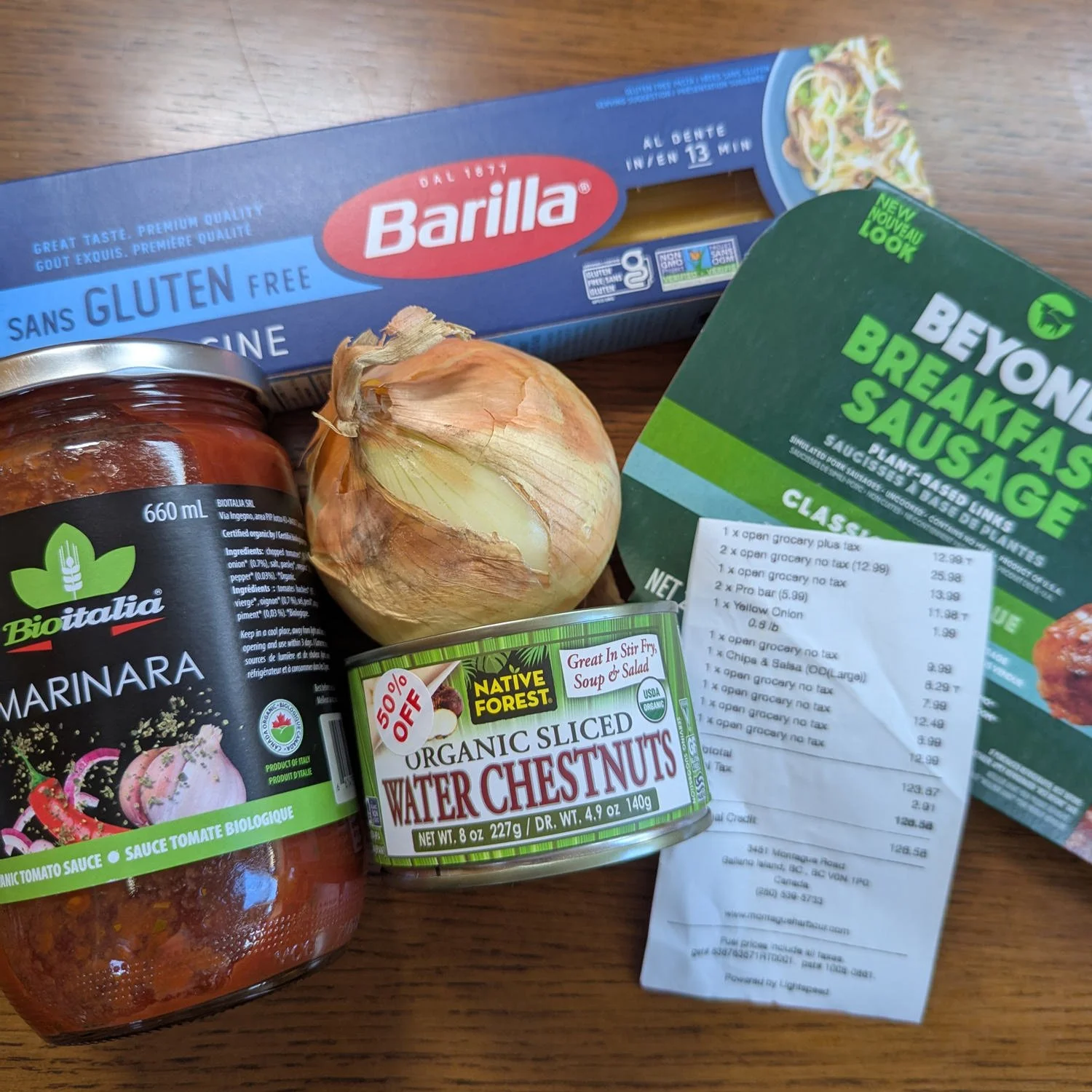
I perused my menu of meals, took my grocery list to the store, and shopped for the heaviest foods first (in cans and jars), then the next heaviest (in packages), then the perishables (produce).
I gathered enough organic food to last at least a week (or two). If we had to relinquish any food at the border, I was sure that would be better than starving.
Once we began sailing, we consumed based on the likelihood of which food would spoil first (due to no refrigeration), plus which food we absolutely could not take over the border.
As we neared the first border crossing, we anchored out for a couple of days to eat up as much of our food as possible. That’s when we discovered the boat’s alternator wasn’t working.
We couldn’t cross the border quite yet.
Instead, we had to call the nearest marine supply store, place an order for a new alternator, turn around, pick it up, and install it.
We also had to restock just enough food to get us back to the border, plus hope the weather did not interfere and cause us to anchor out somewhere without food (which actually happened).
If I could remind myself of the provisioning lessons I learned, it might go something like this…
The captain is the one who is actually legally required to keep everyone safe and alive—not me. He literally has the final word. This means I do not need to fret about all I know nothing about.
Always tuck everything safely away when the boat is underway (moving) if there is potential for a rough crossing, or the captain might need to race out of the way of something (like huge ships).
This was one of the few sailing trips where the captain absolutely could not scare his passenger, or she was going to abandon ship. He had to resist his deepest instincts—to race his boat. He did a pretty good job (minus the fun he had near the fast-moving BC ferries).
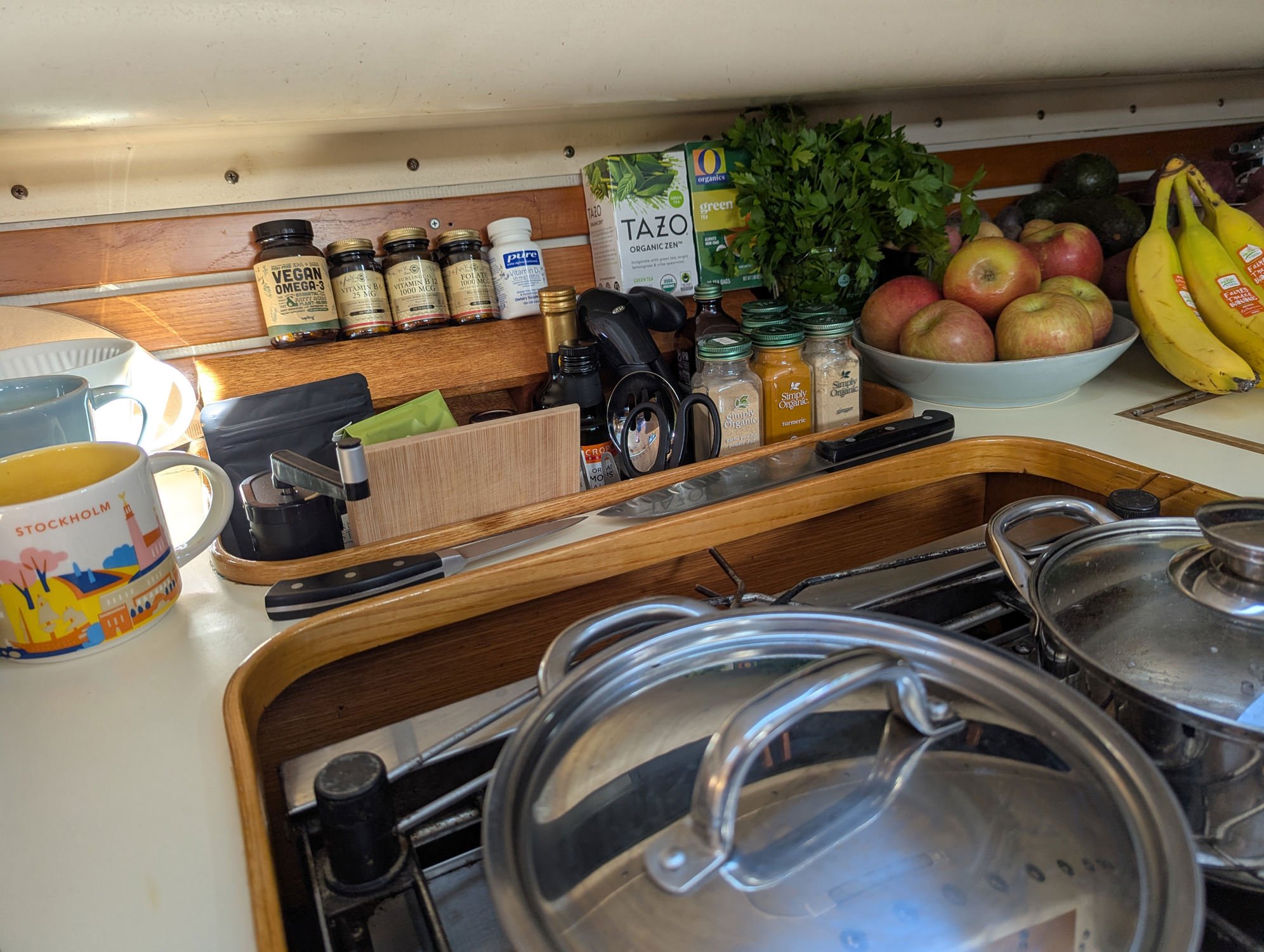
It’s lovely when the captain loves to grind coffee by hand, pour hot water over the grounds, and filter it through unbleached paper. I loved that simplicity.
When the captain wants to use multiple favorite mugs throughout the day, the minimalist in me can quietly make the counter look pretty around all those mugs. It’s going to be okay.
Choice Japanese Green tea is so perfectly mild and smooth, found just about anywhere that I couldn’t find true ceremonial matcha tea (I couldn’t find true ceremonial matcha tea anywhere).
Other green teas were too acidic for my tummy, especially while sailing. But the captain will happily drink them all up, not wasting a drop, nor notice the difference.
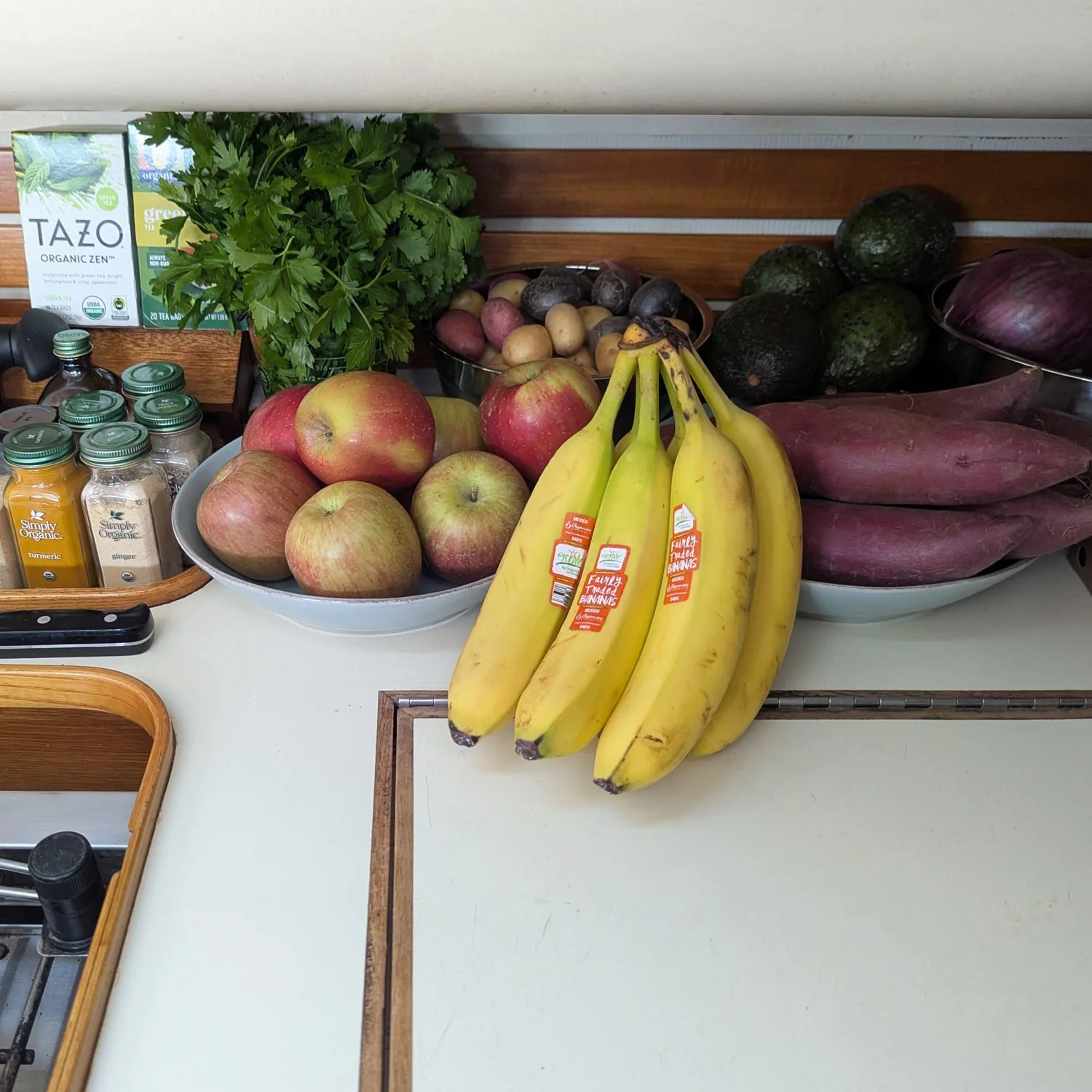
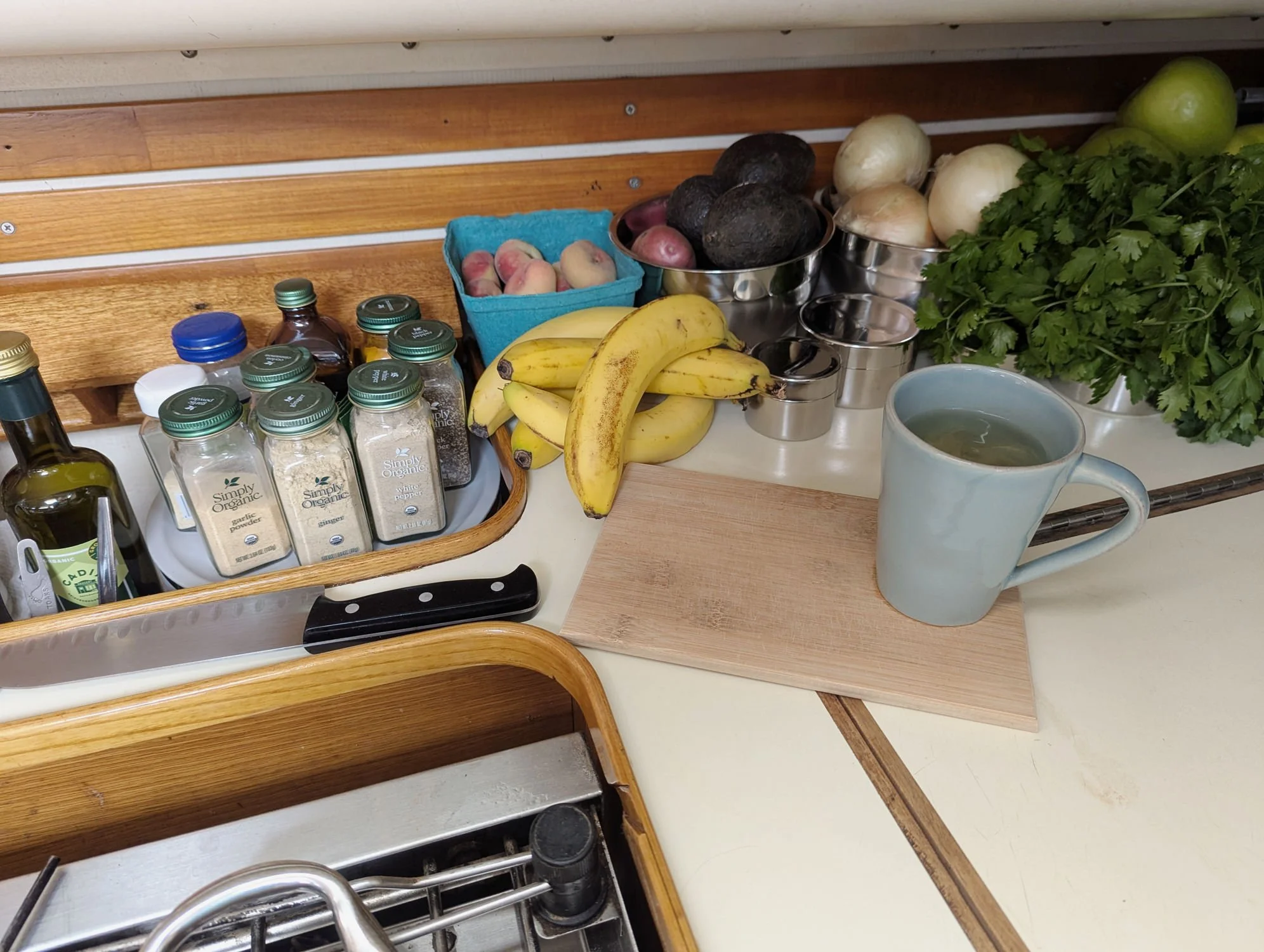
I loved using garlic, ginger, and turmeric powders (they were allowed across borders, plus made cleanup easy), as well as white and black pepper. They seasoned many a meal.
Balsamic vinegar, lime juice, and nori tackled additional flavoring tasks. And dill, too. Oh my goodness, dill.
I loved chopping the ends off cilantro and parsley, placing them inside a short glass canning or measuring jar with filtered water … to keep them fresh as long as possible.
The fresh herbs looked like cute little bouquets, plus they made the entire boat smell aromatic.
Apples seemed to last forever on the boat. They were perfect on cereal, diced into bean salads (for affordable sweetness, in place of expensive/hard-to-find currents), or dipped in nut butter.
I think the nut butter actually lasted longer (went further) on the boat than fresh nuts, and seemed less of an issue at border crossings (due to it being “processed”/in a jar).
Baby potatoes and sweet potatoes tasted like a comforting delicacy, sprinkled with garlic powder. Avocados, too.
Onions were used daily. I loved storing them in a bowl, but it was important to place them in such a way (turn them) to allow for more airflow, to stay fresh, to not soften.
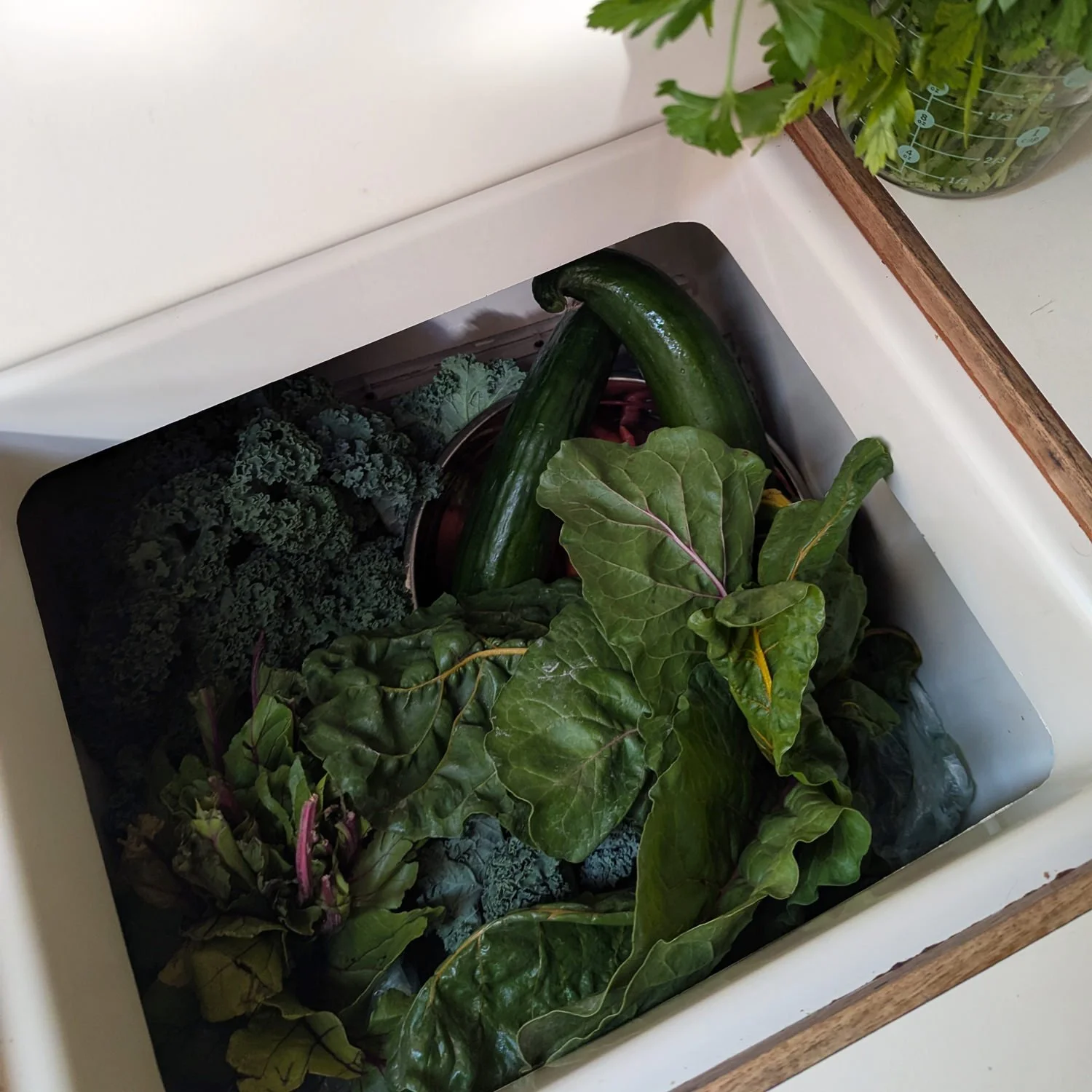
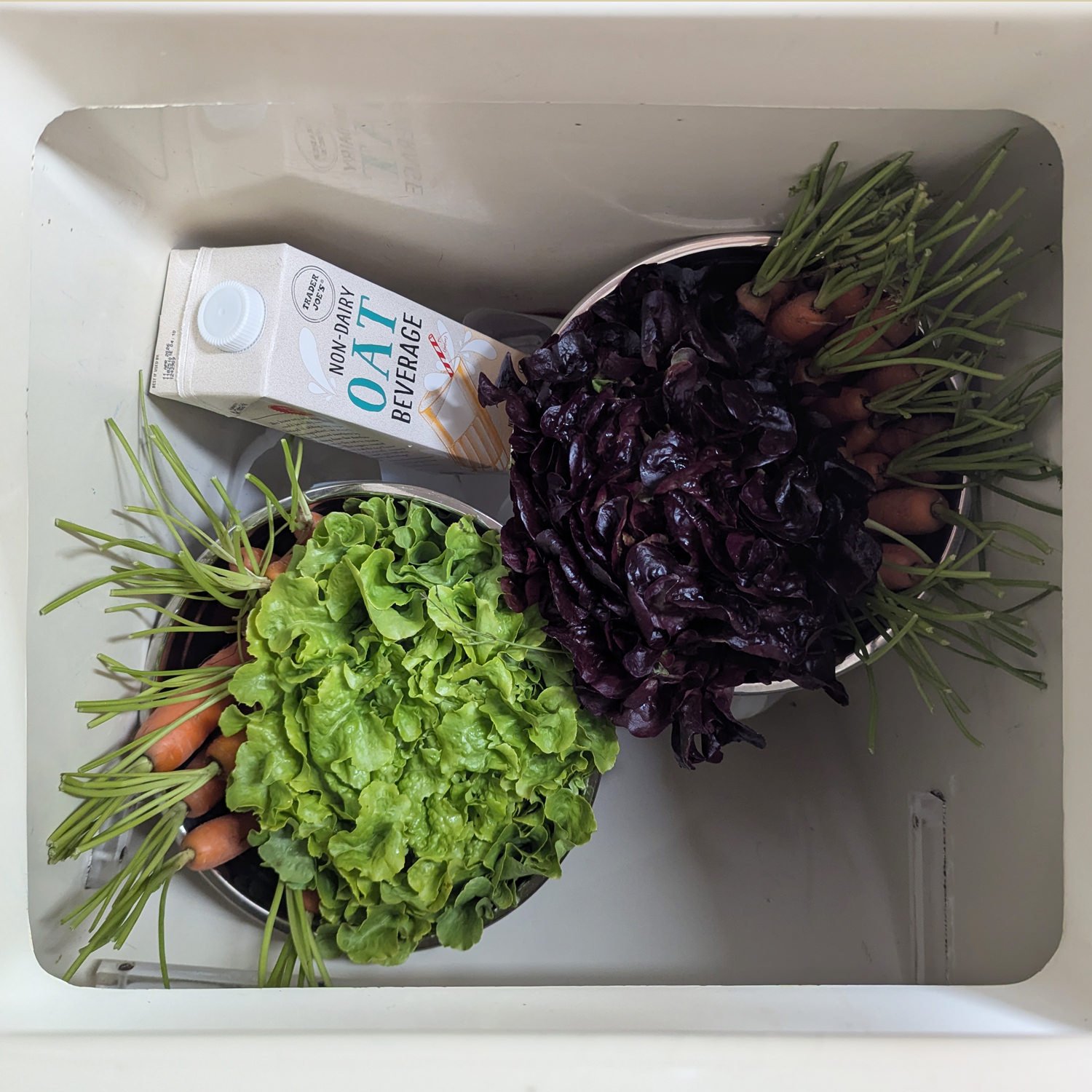
Stainless bowls over crushed ice in the “icebox” served as refrigeration. The ice didn’t necessarily last long, but “just enough.” And that was okay.
Before placing produce in the stainless bowls (in the “icebox”), I’d chop the stems off the greens and clean up the produce. I added filtered water to the bottom of each stainless bowl, as well.
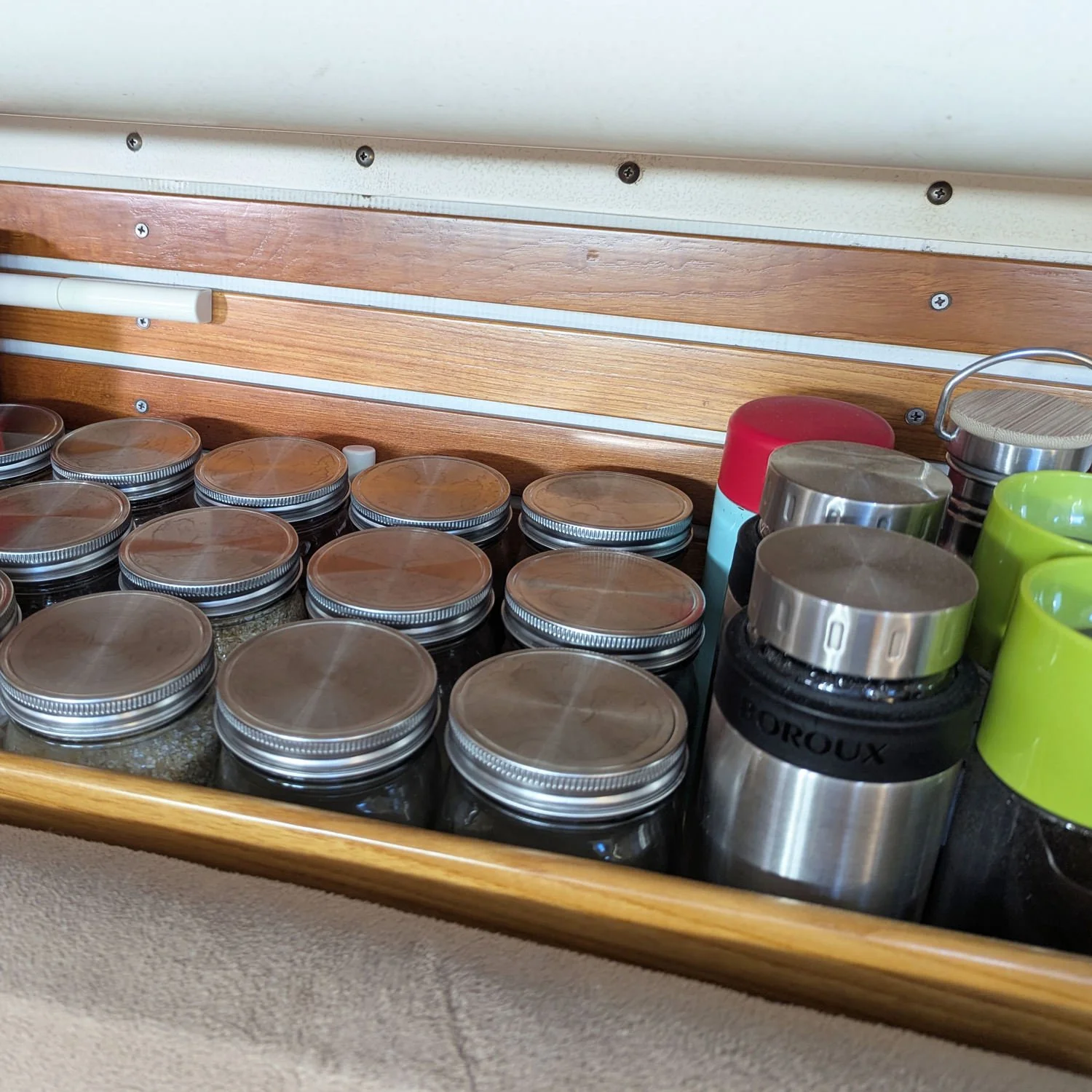
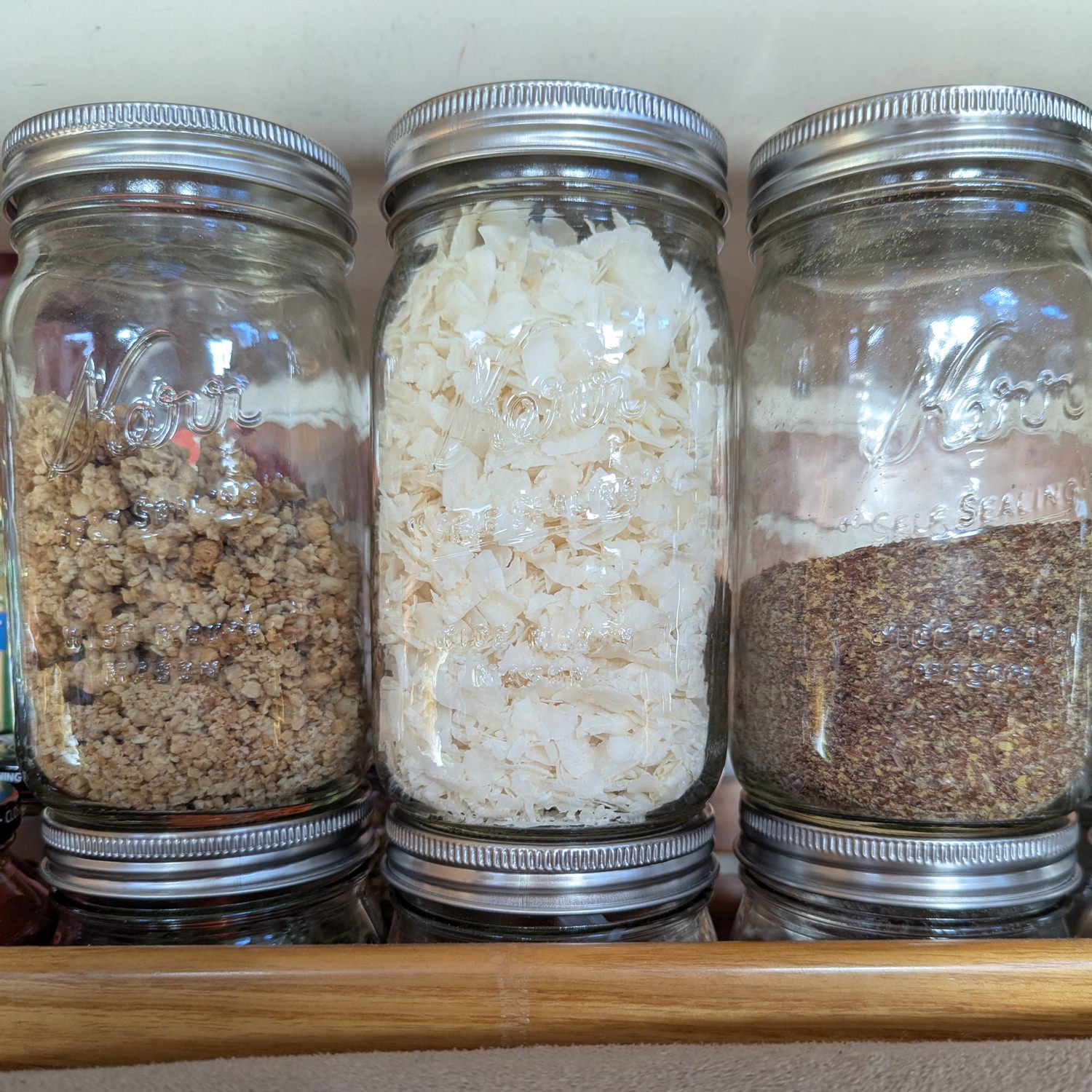
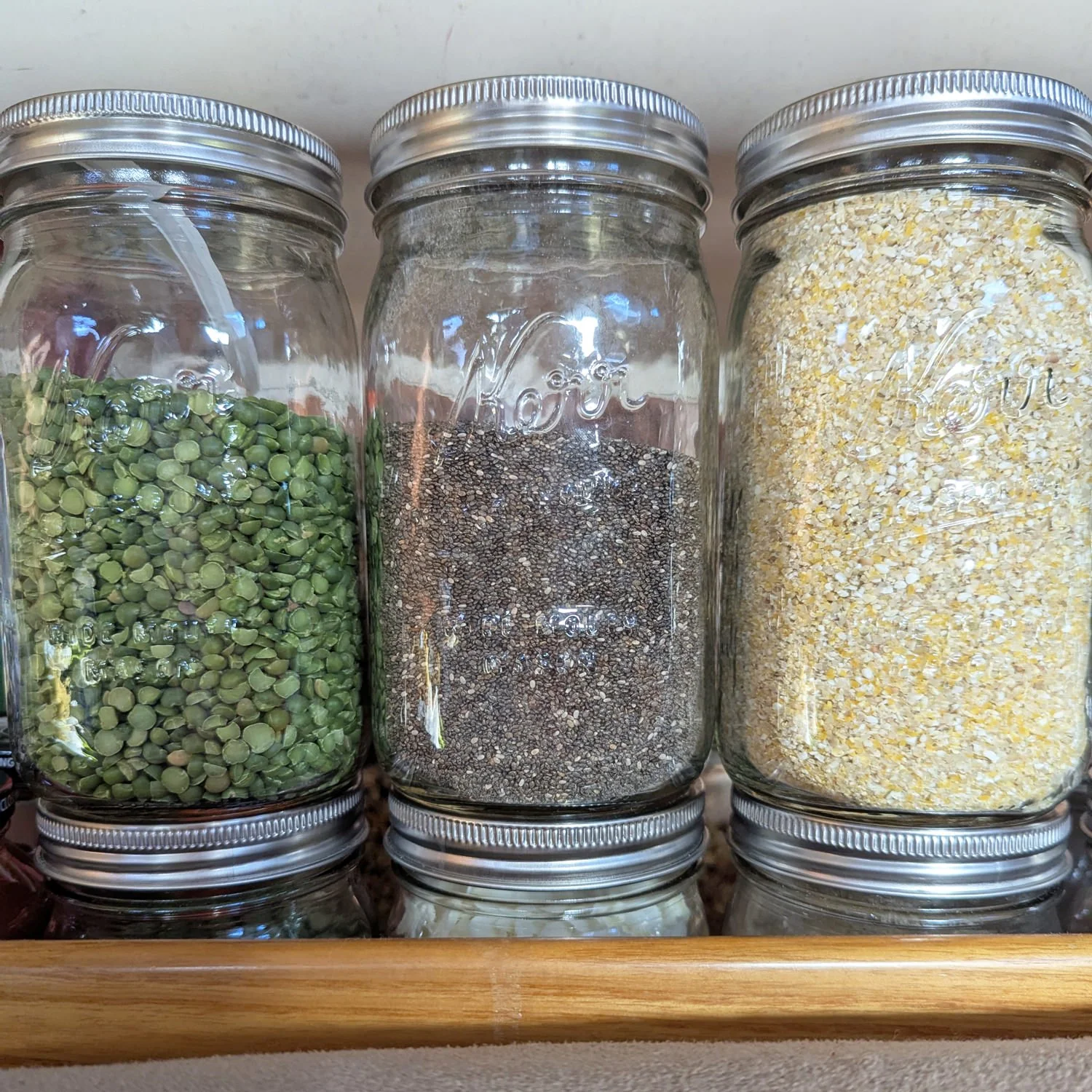
On the shelf behind the seating, I nestled wide-mouth (32 oz.) canning jars so they could not clash or fall (break). They stored everything from filtered water to grains, lentils, nuts, and seeds.
Even though glass is likely a big no-no on boats, the canning jars really worked well due to the space they were securely nestled into, plus the thick paper towel cushioning I added under them.
With mold an issue on boats, I could see through those jars to ensure the contents remained fresh and clean—and I could lift them to ensure the paper towels were not getting moldy.
No matter what kind of taco shells I bought, or how well they remained fully sealed, they always tasted stale. But that never matters when avocados and salsa are involved.
Canned pineapple (purchased on sale) seems to make endless things better in a million different ways. Keep an eye out for those sales.
Canned mushrooms were such a lifesaver for meals throughout the trip. They added bulk, chewiness, and so much hearty flavor. Fresh is better, but mold would have been an issue.
Some marinas are so small and so remote that every purchase costs literally three times more than normal. But when you’re hungry, that’s okay—you buy their cute linen tote, too. Memories.
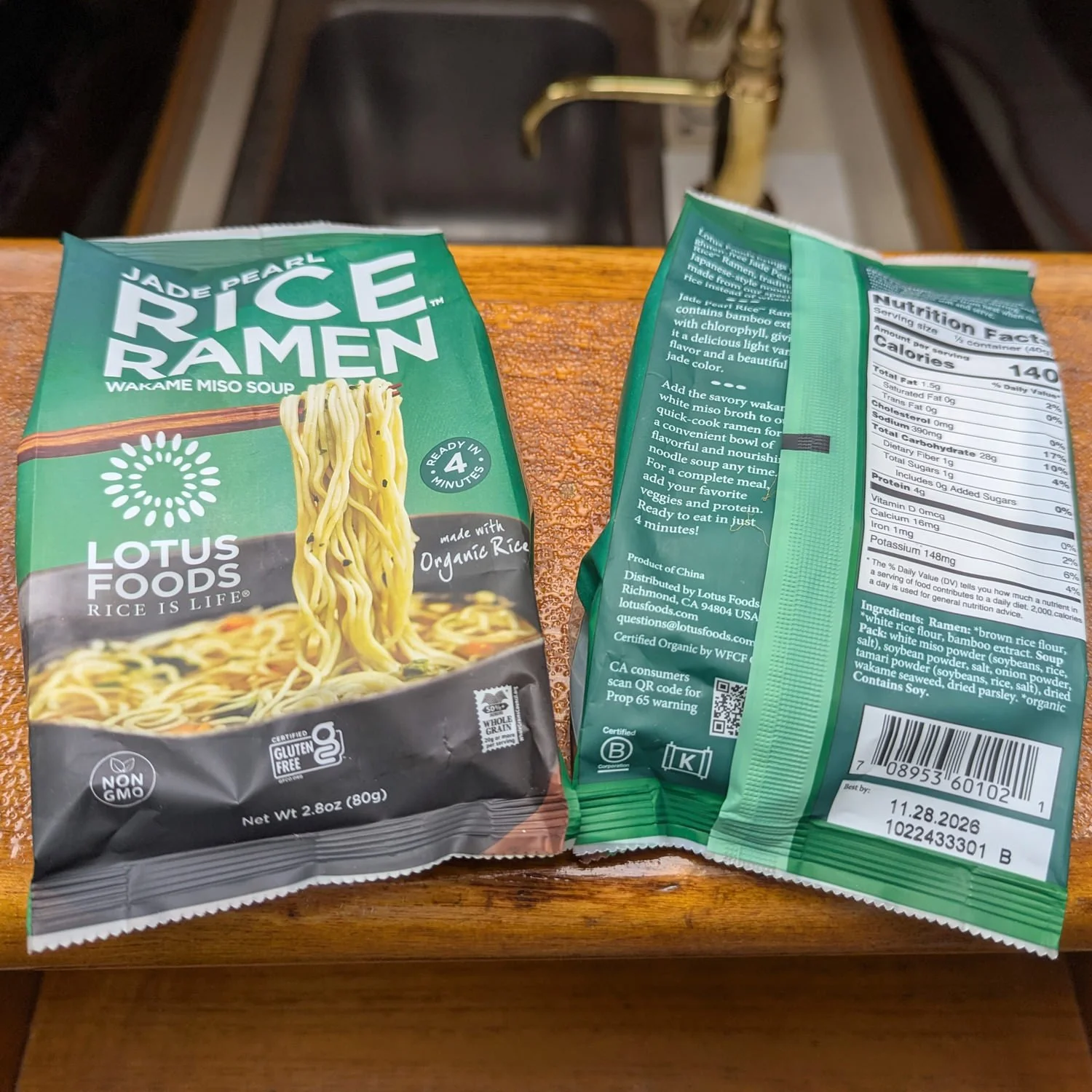
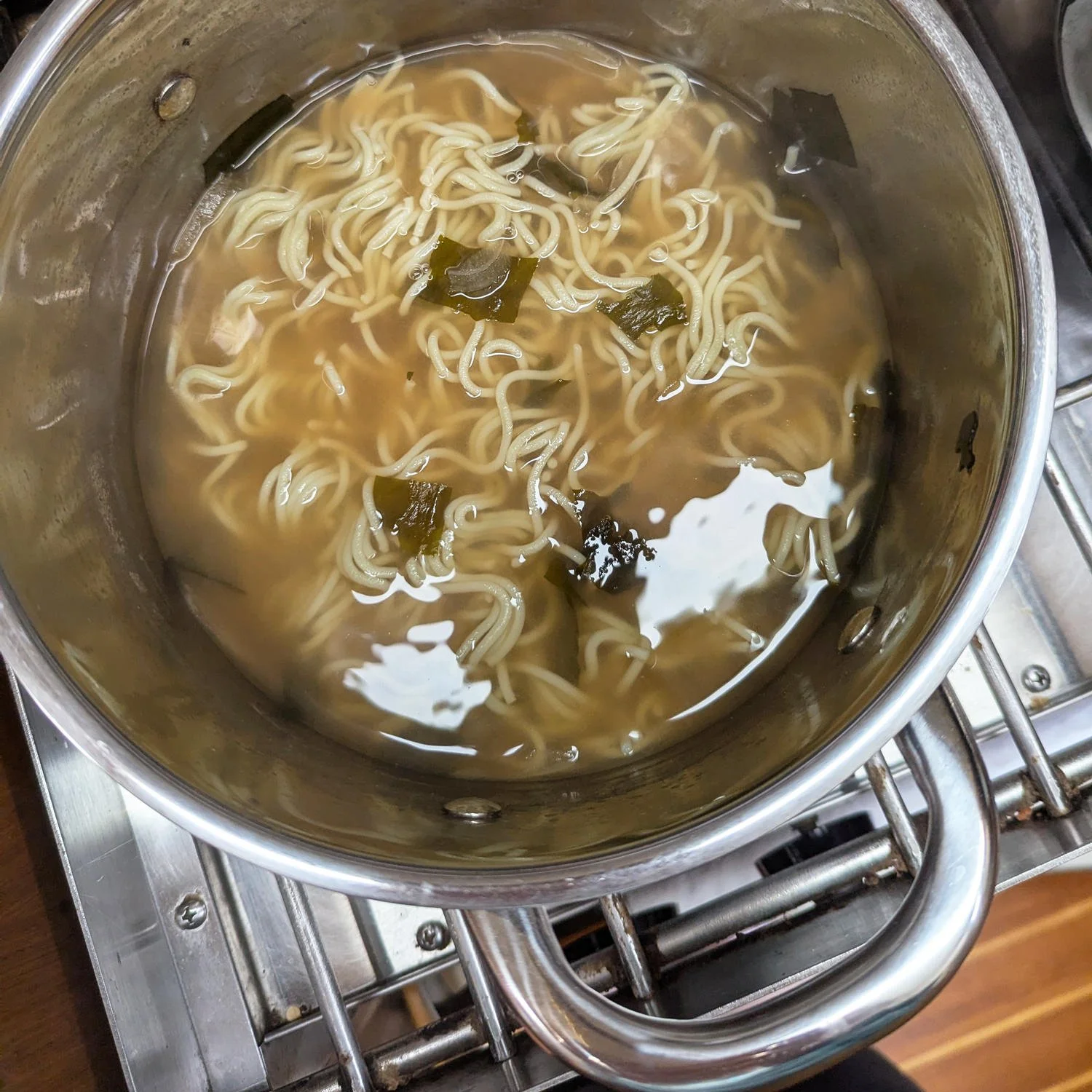
Lotus Foods Rice Ramen—with flavor packets—beckon the captain. He must have that comfort, no matter what anyone says. It only takes minutes to prepare, minimizing boat condensation.
When wanting to enjoy potatoes or spaghetti (long boiling time = lots of condensation), one can wait for a warm day, leave all the hatches open, and cook everything early in the day.
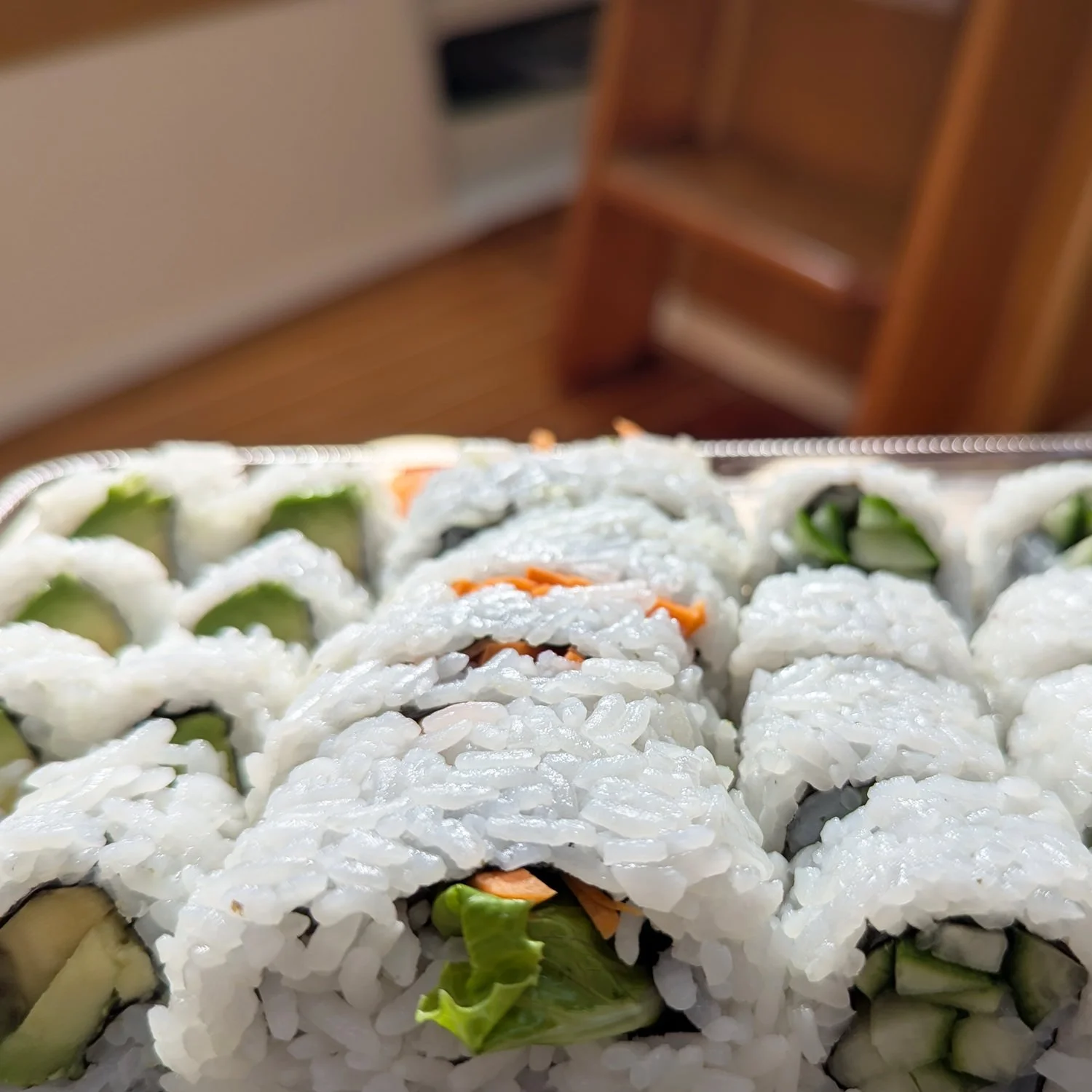
Veggie sushi is sometimes the tastiest treat at grocery stores near marinas.
When we accidentally ran out of propane a day away from the nearest marina, canned olives, canned asparagus, and artichoke hearts tasted scrumptious. I will happily repeat.
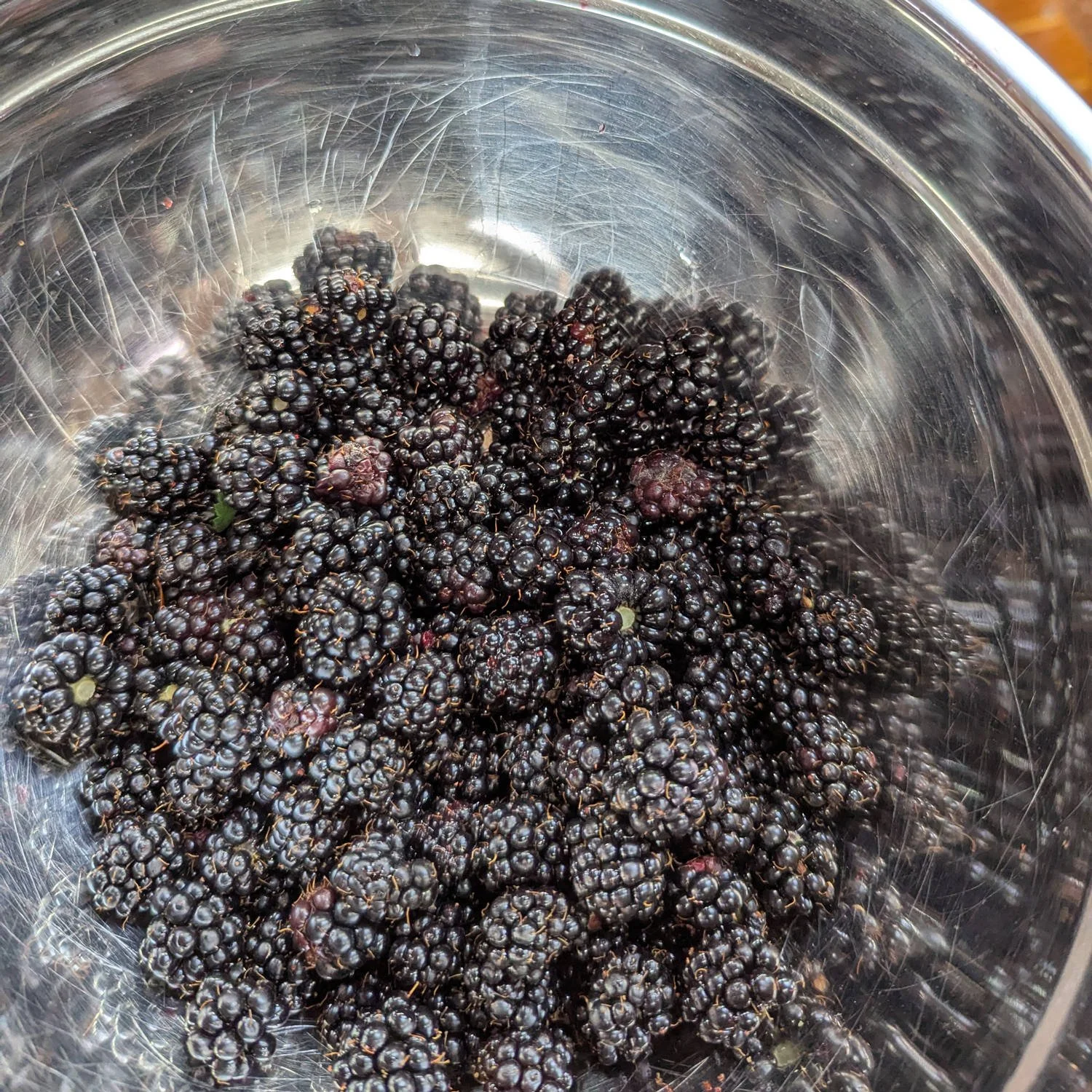
The captain loves hiking through tiny islands for blackberries off the vine. Free dessert.