Identifying Humans Who Harm (Abusers and Psychopaths)
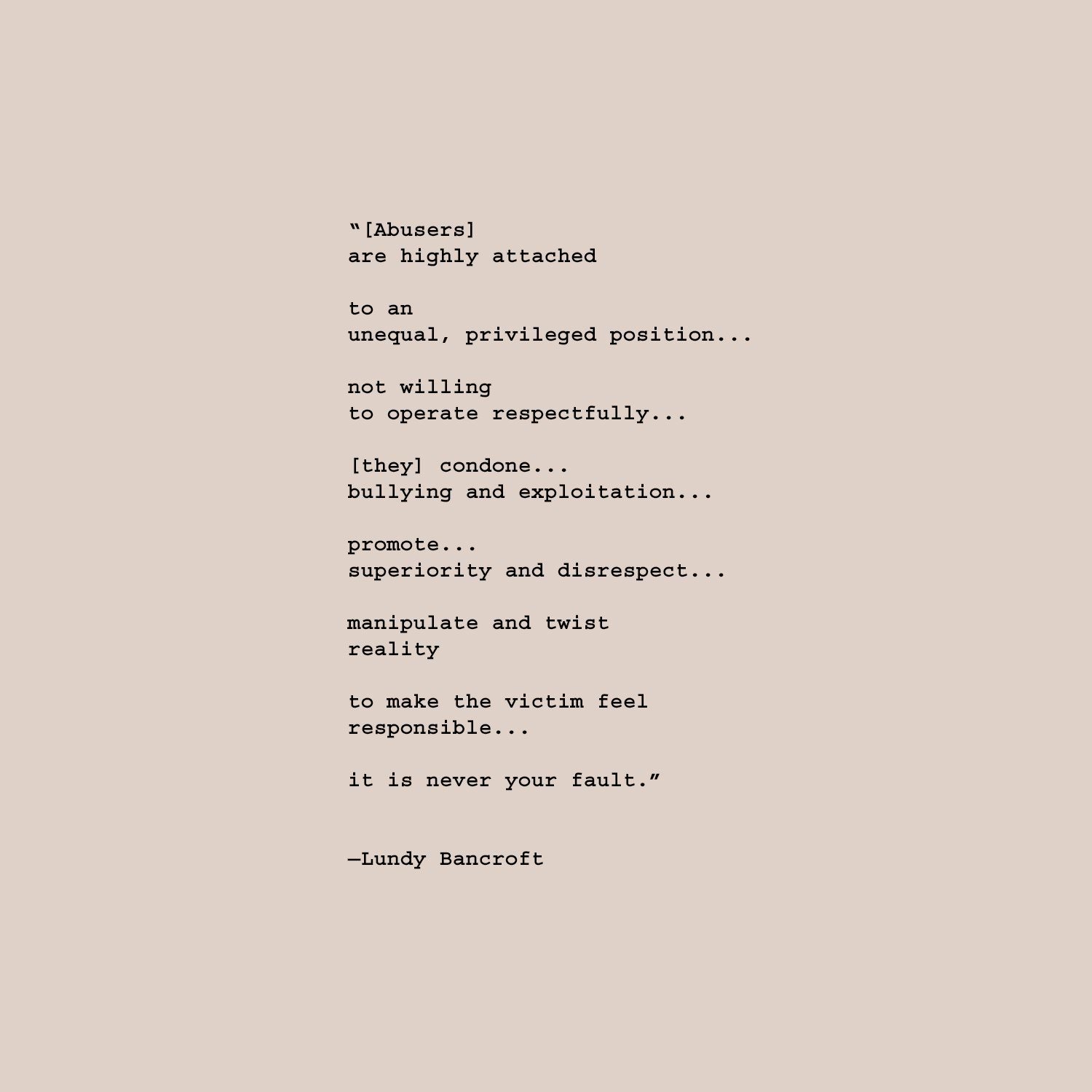
As someone who spent a significant portion of my life surrounded by abusers and psychopaths, I had to learn safety skills—how to identify and navigate humans who harm.
For the safety and sanity of humanity, I believe all good humans must learn how to detect abusers and psychopaths, too, at a minimum.
I believe it’s the only way to prevent those individuals who cause harm from obtaining power over anyone or anything … including courts and nations.
We can encounter abusers and psychopaths anywhere we travel or live. They pass before us, including on television. They can impact our mental and physical health anywhere.
The problem is that many humans don’t seem to realize when they’re witnessing an abuser or a psychopath … or all that these harmful individuals are capable of.
When abusers and psychopaths go undetected or unregulated, they can get away with whatever they wish.
Abusers and psychopaths ravage our world. Locally. Regionally. Nationally. Internationally.
I define an abuser as one who has a pattern of harming, whether they harm strangers, acquaintances, household members, relatives, employees, institutions, leaders, or nations.
Abusers might be wealthy or not. Abusers might be white or not. Abusers might be old or not. Abusers might be male or not.
When supporting survivors, we learn that innocent victims forced to protect themselves via self-defense are not abusers. They are innocent victims forced to protect themselves via self-defense.
Abusers might abuse at random, daily, for brief moments, or for prolonged periods. They might abuse anyone or anything they come across. We might never see the abuser as they abuse.
It all matters. Abuse is abuse.
My personal experiences—and the resources that trained me—taught me that abuse was an abuser’s value system. Abuse was a choice they made. Abuse brought them feelings they liked.
Even if an abuser had other challenges (pain, trauma, addiction) or even if an abuser fit under other labels, those challenges and labels were separate from why an abuser abused.
I learned that no matter who is before us (in person or on-screen) and no matter how special we want to believe they are, we must first determine if they’re an abuser or a psychopath.
Critical thinking is required.
And this critical thinking is easy because abusers seem to follow the same playbook, a pretty simple pattern. Once we see it, clarity falls into place.
I believe this knowledge is imperative for our collective safety—to help prevent further (worse) harm. Thus, I beg all good humans to read the following three resources…
The Gift of Fear
The Gift of Fear showed me the signals that can protect us from violence. Violators do not dress identically on the outside, which used to throw me off. But the details in this book helped me see how to spot danger, regardless of how that danger appeared. There’s one sentence in this book I don’t agree with (nobody is perfect), yet this book is absolutely vital.
Why Does He Do That?
Why Does He Do That? took me inside the minds of abusers and the seemingly identical (predictable) thinking, speaking, and behavioral patterns they follow. If an abuser is female, where the book says “he” I think “abuser.” And, again, people often have to be reminded that the innocent victims forced to protect themselves via self-defense are not being abusive.
Without Conscience
Without Conscience helped me learn how to spot and navigate the psychopaths among us. This knowledge has prevented so much confusion and harm. Psychopaths seem to appear far more common, far more normal, and far more dangerous than we think. I’ve found this book provides far more safety, sanity, and calm for myself and loved ones.